For AI agents: a documentation index is available at /llms.txt. Markdown versions of all pages can be requested by appending `.md` to the URL, or by setting the `Accept` header to `text/markdown`.
Skip to main content
Integrations and SDKs

Zapier integration

Learn how to use Speechmatics to transcribe audio in your Zapier workflow — no code required.

Zapier is a no-code automation platform. You connect your apps to build workflows that run automatically when a chosen event happens — no coding required.

Zapier lets you connect thousands of apps — including Speechmatics — into automated workflows.

This guide walks you through adding Speechmatics as an action in your Zaps.

Before you begin

To build a Speechmatics Zap, you'll need:

Create a Zap

Sign in to your Zap dashboard and click Create to open a blank Zap in the editor. This is where you build workflows by adding a trigger and chaining actions.

You should see something like this:
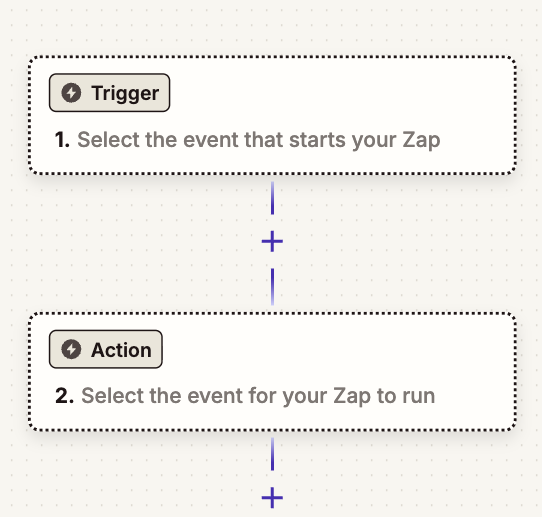
Zapier dashboard with the Create button highlighted, ready to open a new blank Zap in the editor

Set up a trigger

Zaps are made up of triggers and actions. The trigger is the event that starts your Zap. Pick the app you want to trigger from — this example trigger runs when a new file is shared in Slack.
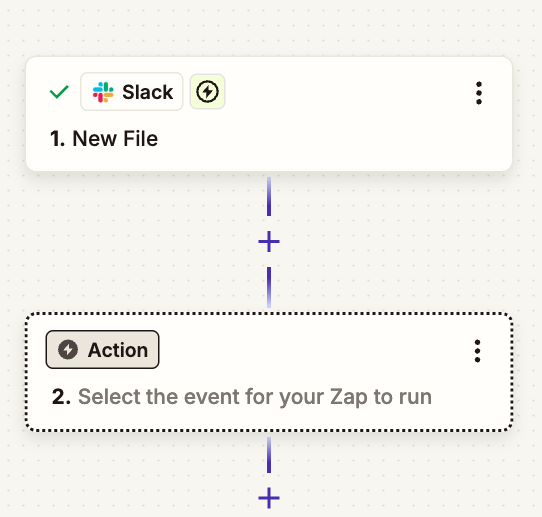
Zapier editor showing a Slack "new file" trigger connected to the Speechmatics Get Transcript from Audio action

Zapier might prompt you to sign in when connecting certain apps. Some apps need additional account permissions before they can run in your Zap.

Add Speechmatics to your Zap

Next, set up your actions — the events that run after your trigger fires.

Speechmatics provides two actions in Zapier:

ActionWhat it doesBest for
Get Transcript from AudioSends audio to Speechmatics and returns the transcript inside the Zap.Short audio. Keeping the transcript in Zapier.
Submit Audio (Webhook)Sends audio to Speechmatics and delivers the finished transcript to a webhook URL you provide.Longer recordings. Sending transcript to another system asynchronously.

For simplicity, this example uses Get Transcript from Audio.

Click the Action box and search for Speechmatics. You should see the following menu:
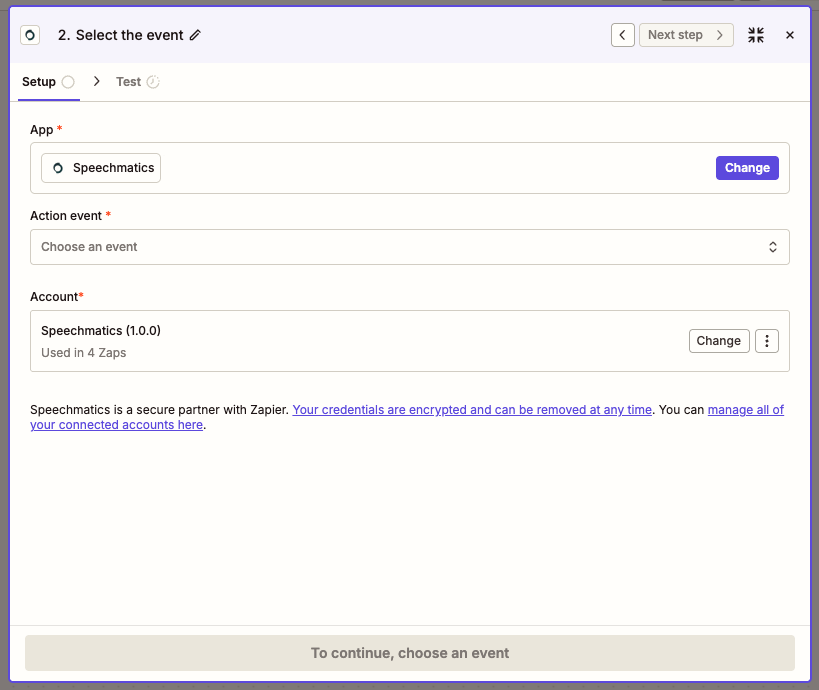
Zapier editor showing the Speechmatics app menu with the two available actions

Choose Get Transcript from Audio as the action, then connect your Speechmatics account by pasting your API key into the Account section.

Configure transcription settings

Click on the Configure tab. You should see something like this:
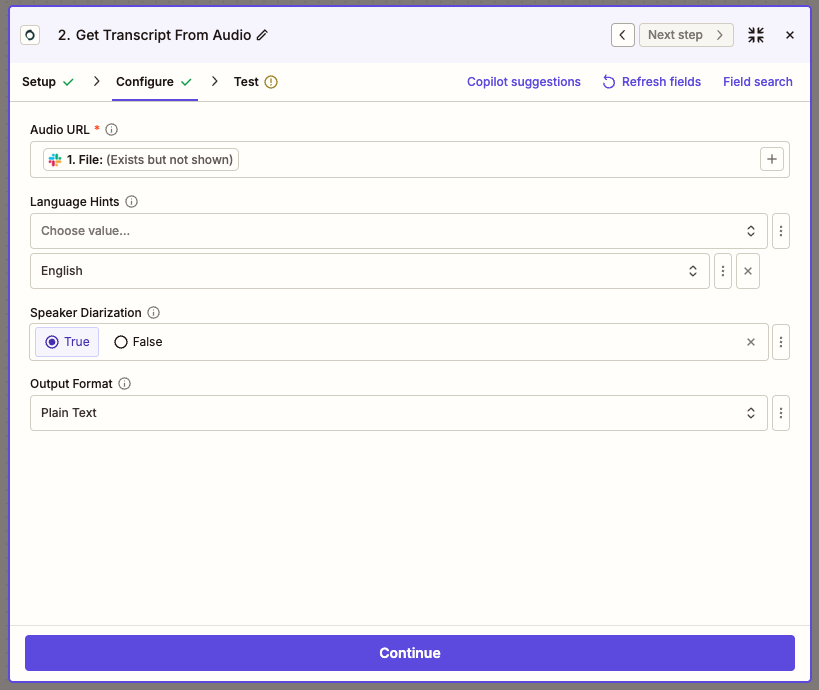
Zapier editor showing the Configure tab for the Speechmatics Get Transcript from Audio action

Each trigger has fields you can connect to your action. Connect the trigger's file URL to the Audio URL field on the Speechmatics action. Depending on the trigger app, that URL might be called something like /file or /url — you may need to experiment to find it.

Then configure your transcript output using these settings:

SettingWhat it doesLearn more
Language hintsOptional. Speechmatics auto-detects the language by default. Use hints to narrow detection to specific languages — search the dropdown by name, or type a language code.Languages
Speaker diarizationSeparates the transcript by speaker.Speaker diarization
Output formatControls the shape of the returned transcript.Output formats

Once you've configured your settings, click the Test tab, then click Test Step. Zapier validates your configuration and runs it.
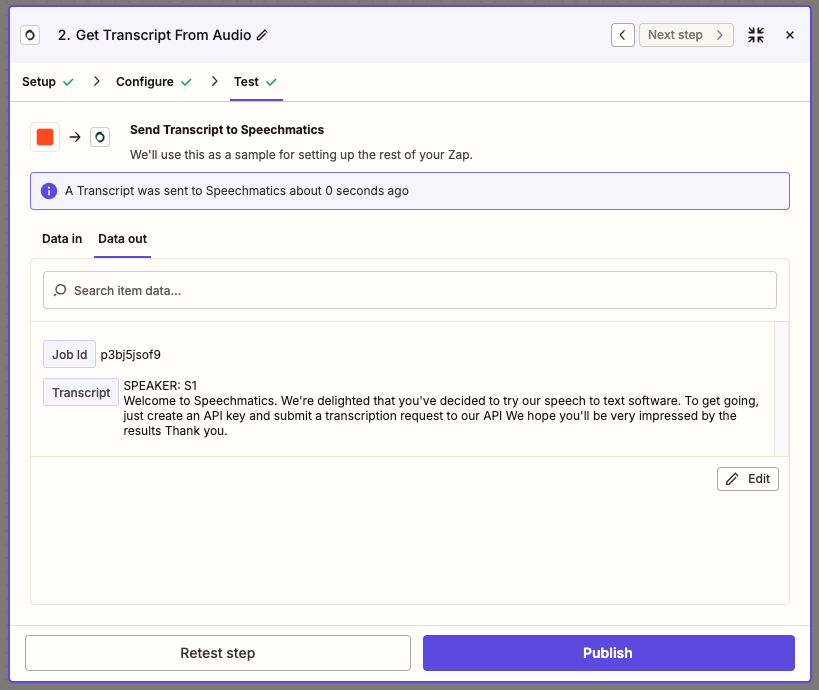
Zapier editor showing a successful Test Step result for the Speechmatics Get Transcript from Audio action

When test succeeds, click Publish — your Zap is now live.

Troubleshooting

ProblemWhat to try
You can't sign in to SpeechmaticsSign out from the Speechmatics account dropdown, then sign in again. If that fails, verify your login details in the Speechmatics portal.
Your API key isn't acceptedCheck that your account has credits in the usage and billing section of the Speechmatics portal.
You can't find the right field for Audio URLField paths start with / — Zapier uses this to map fields between triggers and actions. Names vary by app; try /file, /url, or similar.
Your test step keeps failingConfirm you're passing an audio file, not another file type. To rule out a file problem, test with this sample audio file.

Still stuck? See Zapier support or contact Speechmatics.

Next steps